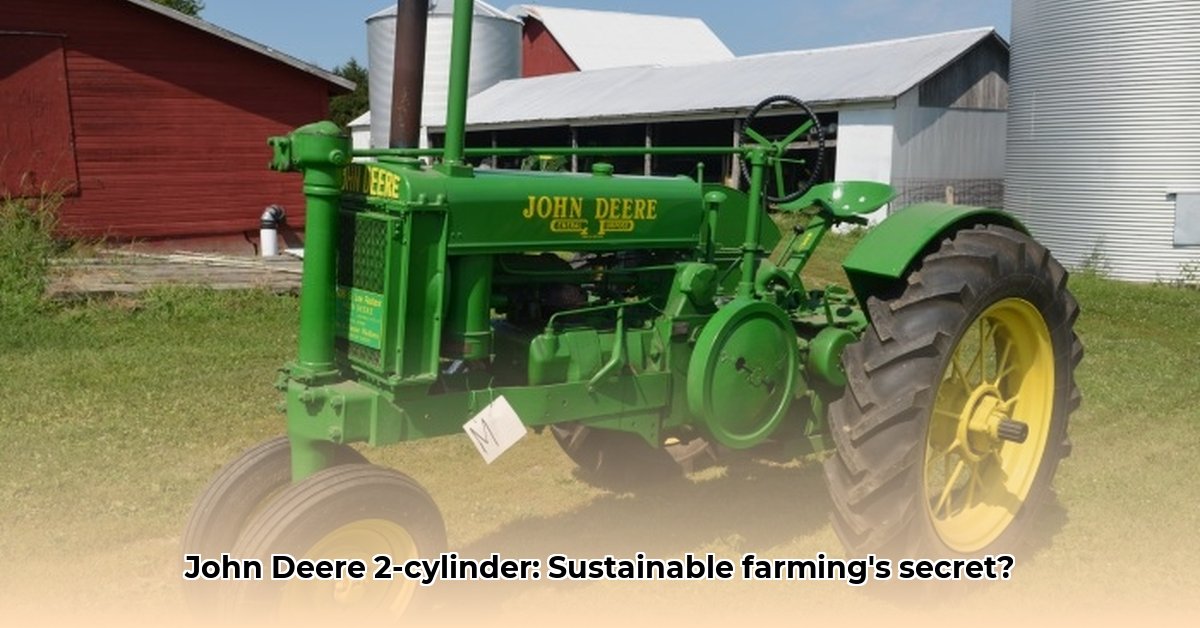
2 cyl John Deere Tractors: Sustainable Farming's Workhorses
The distinctive chug-chug-chug of a two-cylinder John Deere tractor isn't just a sound; it's the soundtrack to a pivotal chapter in American agricultural history. These machines, seemingly simple in design, quietly revolutionized farming, paving the way for increased efficiency and, surprisingly, a nascent form of sustainable practice. This article explores the evolution of these iconic tractors, examining their technological advancements and their impact – both positive and negative – on farming practices and environmental considerations. For more in-depth information, check out this dedicated website: Learn More.
From Waterloo Boy to Modern Marvels: A Legacy of Innovation
Our story begins with the legendary Waterloo Boy, a technological marvel for its time. Farmers traded their horse-drawn implements for this mechanical beast, a monumental shift toward greater productivity. The simplicity of its two-cylinder engine was key; reliability and affordability made mechanization accessible to a broader range of farmers. This widespread adoption dramatically reshaped agricultural practices across the nation. It wasn’t merely about increased power; it was about enhancing efficiency in the fields.
These early tractors laid the groundwork for future innovations. Engineers steadily improved designs, transitioning from less efficient single-cylinder engines to the smoother, more powerful two-cylinder models. This translated into less labor-intensive farming and optimized land usage. Although environmental awareness was limited at the time, these changes paved the way for improved sustainable practices.
Powering Progress: Technological Leaps and Bounds
The transition to two-cylinder power wasn't solely about increased strength; it was about a significant boost in operational intelligence. The introduction of power lifts and power takeoff (PTO) shafts fundamentally altered how implements were used, significantly increasing efficiency and reducing physical strain on farmers. These weren't single-purpose machines; different chassis configurations—tricycle and wide-tread—allowed farmers to adapt to diverse terrains. This adaptability is a cornerstone of sustainable farming; optimizing operations often minimizes fuel consumption per acre harvested.
Nebraska Tractor Tests: A Benchmark for Efficiency
The Nebraska Tractor Tests provide objective data on the progress of these tractors. These rigorous evaluations of John Deere's two-cylinder models offered comparative information on horsepower and drawbar pull, revealing a steady increase in efficiency over time. For instance, the Model D showcased a substantial horsepower increase compared to its predecessors, a clear indication of ongoing advancements. These quantifiable results highlight a continuous improvement trend, leading to more sustainable agricultural methods.
| Model | Belt HP (Nebraska Test, Approximate) | Drawbar HP (Nebraska Test, Approximate) | Notes |
|---|---|---|---|
| Waterloo Boy | Varied, data scarce | Varied, data scarce | Early model, limited test data available |
| Model D | ~30 | ~22 | Significant improvement in power and efficiency |
| Model GP | ~41 | ~30 | Further enhancement with design variations |
Note: The Nebraska Tractor Test data presented here is approximate; precise figures depend on the specific test configuration and testing year. The table illustrates the general trend of increased power and efficiency.
Sustainability: A Nuanced Perspective
While these tractors significantly boosted productivity, a complete assessment of their environmental impact necessitates a nuanced examination. Early models primarily used kerosene, less efficient than later diesel fuel, raising questions about their long-term environmental effects. Although later models utilized more fuel-efficient diesel engines, the overall environmental impact extends beyond fuel consumption. We must also consider manufacturing processes, materials sourcing, and the end-of-life disposal of these durable machines. Further research is needed to fully understand the machines' complete life-cycle environmental impact.
A fully holistic sustainability assessment requires considering various factors that were not fully understood during the tractors' era. Modern sustainable farming practices extend beyond fuel efficiency, encompassing a broader environmental evaluation of the entire agricultural process, from seed to table.
A Continuing Legacy
Despite being superseded by larger, more powerful tractors, the two-cylinder John Deere tractors remain iconic. They were more than just machines; they were powerful instruments of progress, whose influence extends far beyond their operational lifespan. The advancements embodied—increased efficiency, improved adaptability, and integrated implement use—laid the foundation for the modern, technologically advanced (and theoretically more environmentally conscious) mechanized farming systems of today. They serve as a powerful testament to the continual evolution of agricultural innovation and the persistent drive towards more efficient and sustainable practices. Their story embodies the ongoing pursuit of progress in sustainable agriculture.
How Did Early John Deere Tractor Fuel Consumption Impact Sustainable Farming Practices?
Key Takeaways:
- Early two-cylinder John Deere tractors, while increasing efficiency, had notably high fuel consumption, impacting sustainable practices.
- Advancements in engine design and fuel efficiency gradually lessened the environmental footprint.
- Balancing productivity and sustainability proved challenging.
- These tractors' legacy highlights the ongoing evolution toward environmentally friendly agriculture.
The story of sustainable farming and the two-cylinder John Deere tractor begins with the Waterloo Boy. Imagine farmers working dawn till dusk, relying on horsepower. Then came the Waterloo Boy – a revolutionary machine, but not without its drawbacks. Early models consumed significant fuel per acre worked, compared to modern machinery. This high fuel consumption directly translated into increased operating costs and a larger carbon footprint – a considerable environmental impact largely unacknowledged at the time.
Subsequent models showed incremental improvements in fuel economy. Engine designs became more efficient, and fuel system advancements reduced waste. The shift to two-cylinder engines, while increasing power, simultaneously aimed to enhance efficiency. Each improvement represented a small step toward a more sustainable future. However, a complete environmental assessment must consider manufacturing processes, materials usage, and end-of-life disposal. The overall picture is complex.
The legacy of these two-cylinder John Deere tractors remains significant. They represent a critical step in agricultural mechanization, highlighting the ongoing tension between economic benefits and environmental concerns. They serve as a compelling case study in balancing productivity and the pursuit of sustainable farming practices, a challenge that remains relevant today.